USD casino accounts: what currency conversion costs a Canadian player
Payments
Last checked: · CasinoReporters desk
If your casino balance is in US dollars and your bank account is in Canadian dollars, you pay a conversion markup on the way in and usually again on the way out. With Canadian card issuers charging around 2.5% over their reference rate, a C$500 round trip can lose close to C$25 before a single spin.
On this page9 sections
- Where does the conversion actually happen?
- How much do Canadian banks charge on a US-dollar card charge?
- What does a C$500 round trip cost?
- What happens to a US-dollar win?
- What does a USD account cost over a normal month of play?
- How does double conversion happen?
- How do you avoid paying conversion at all?
- What should you check before opening an account?
- Frequently asked questions
Where does the conversion actually happen?
Money changes currency at the point where a Canadian-dollar account pays a US-dollar account. With a USD casino balance, that point can sit in one of three places:
- Your card issuer. If the casino or its payment processor charges your card in US dollars, your bank converts the charge into Canadian dollars and adds its foreign-currency fee.
- The casino or its processor. If you pay in Canadian dollars and the casino credits a USD balance, the casino side does the conversion at a rate it sets.
- A wallet or intermediary. An e-wallet or transfer service between your bank and the casino may hold its own currency balance and convert at its own rate.
In each case the cost is the gap between the rate you get and the reference rate of the day. You rarely see it as a line item, because it is built into the rate, not charged as a fee.
How much do Canadian banks charge on a US-dollar card charge?
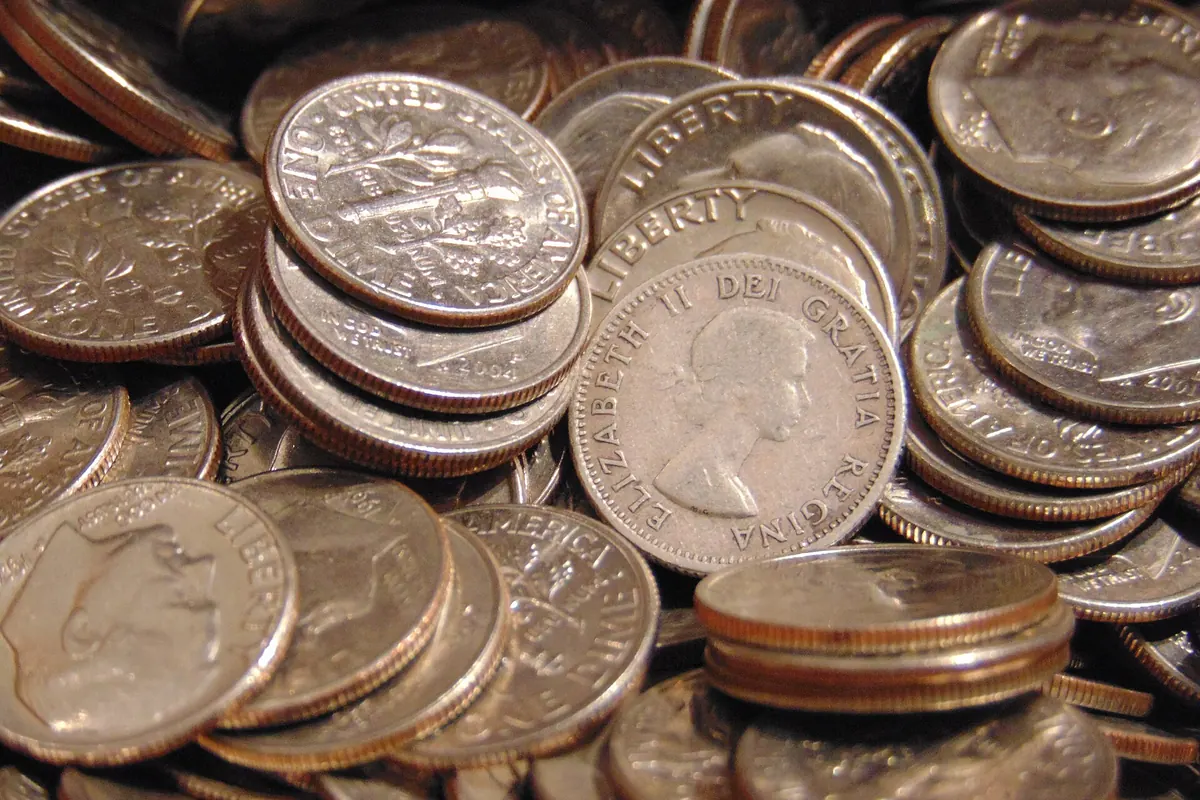
The large card issuers state their markup in the information box that comes with each card. RBC's information box for its Avion cards says foreign-currency transactions are converted at an exchange rate that is 2.5% over a benchmark rate RBC pays on the date of conversion. TD's information box for its Cash Back Mastercard says foreign-currency transactions are converted at the Mastercard rate plus 2.5%.
Debit cards are no free route. RBC's page on cross-border debits says those transactions are converted at 2.5% over the interbank spot rate, plus a fixed fee that is typically $1.00 per transaction. A fixed fee hurts small, frequent deposits more than one large one, as the table below shows for C$500 moved into a US-dollar account.
| How you deposit C$500 | 2.5% markup | Fixed fees at $1.00 each | Total cost | Cost as share of C$500 |
|---|---|---|---|---|
| 1 deposit of C$500 | C$12.50 | C$1.00 | C$13.50 | 2.7% |
| 5 deposits of C$100 | C$12.50 | C$5.00 | C$17.50 | 3.5% |
| 10 deposits of C$50 | C$12.50 | C$10.00 | C$22.50 | 4.5% |
| 20 deposits of C$25 | C$12.50 | C$20.00 | C$32.50 | 6.5% |
That is one direction only, and it is before any interest a card might charge. Whether your card treats a casino charge as a purchase or as a cash advance is a separate question with its own costs; our guide to credit card casino deposits and cash advances covers that separately.
What does a C$500 round trip cost?
The example below follows C$500 into a US-dollar casino balance on a credit card and straight back out, with no play at all. Two numbers are assumptions for illustration, not quotes: a benchmark rate of 1 USD = 1.37 CAD, and a credit back to your card converted at 2.5% below that benchmark. Your issuer's agreement says how credits and refunds are converted, and that differs between cards.
- At the benchmark alone, C$500 buys C$500 ÷ 1.37 = US$364.96.
- With a 2.5% markup, each US dollar costs 1.37 × 1.025 = C$1.40425, so the same C$500 buys only C$500 ÷ 1.40425 = US$356.06. You have already lost US$8.90 of buying power.
- You withdraw the full US$356.06 back to the card.
- On the way back, each US dollar is worth 1.37 × 0.975 = C$1.33575, so you receive US$356.06 × 1.33575 = C$475.61.
- Round-trip cost: C$500 − C$475.61 = C$24.39, or 4.88% of the deposit.
That 4.88% is larger than the house edge on many casino games. The 94% and 96.5% RTP settings compared in our article on slot RTP versions cost C$60 and C$35 per C$1,000 wagered; the conversion costs about C$49 per C$1,000 moved through and back, no matter how you play.
What happens to a US-dollar win?
The same spread applies to winnings. Using the illustrative rates above, a US$1,000 withdrawal at the benchmark would be worth C$1,370. At 2.5% below the benchmark you receive C$1,335.75, so C$34.25 of the win disappears in conversion.
The bigger the cash-out, the bigger the amount in dollars, even though the percentage stays the same. That is often when the cost becomes visible, because a round number in the casino lobby lands as an odd, smaller number in the bank account.
What does a USD account cost over a normal month of play?
A single round trip shows the principle; an ordinary month shows the habit. Take a player who deposits C$100 a week on a debit card into a US-dollar balance and cashes out once at the end of the month, with US dollars worth C$300 at the benchmark rate. Using the RBC debit terms quoted above and the same illustrative 2.5% spread on the way back:
- Four deposits of C$100: 2.5% markup on C$400 = C$10.00, plus four fixed fees of $1.00 = C$4.00.
- One withdrawal worth C$300 at the benchmark: 2.5% below benchmark = C$7.50 less than that.
- Conversion cost for the month: C$10.00 + C$4.00 + C$7.50 = C$21.50.
- Same month in a Canadian-dollar account funded by a Canadian-dollar method: no conversion, so C$0 on this line.
Over a year of the same pattern, that is 12 × C$21.50 = C$258 spent on currency alone. None of it shows up as a casino loss or a bank fee in the usual sense, which is why it tends to go unnoticed. Note that the cost depends only on how much money crosses the currency line and how many times, not on whether you win or lose. A player who deposits often and in small amounts pays more than one who deposits rarely, even with identical results at the tables.
Before comparing two sites, add this cost to the comparison the same way you would add a withdrawal fee. A site with a slightly better bonus but a US-dollar-only cashier can easily end up more expensive than a Canadian-dollar site with a plainer offer.
How does double conversion happen?
Double conversion is when the same money is converted twice in one direction. It happens when two parties in the chain each think they are the one handling the currency. Typical set-ups where it can arise:
- You deposit in Canadian dollars, the casino converts to US dollars for your balance, and the processor then submits the charge to your card in a foreign currency, so your bank converts again.
- You load an e-wallet in Canadian dollars, the wallet holds a US-dollar balance for the casino, and the casino account is in yet another currency.
- You withdraw US dollars to a Canadian-dollar method that the processor converts, and your bank applies its own credit rate on arrival.
You can spot it on the statement. If the casino receipt shows a US-dollar amount and your bank statement shows a foreign-currency line with a conversion rate, the bank converted. If the bank statement shows a plain Canadian-dollar charge but your casino balance shows US dollars, the casino side converted. If both happened, you paid twice.
How do you avoid paying conversion at all?
Keep the whole chain in one currency. The simplest version is a casino account held in Canadian dollars and funded by a Canadian-dollar method:
- Interac e-Transfer is a domestic service: Interac describes it as a way to send money to anyone in Canada using online banking. Paired with a CAD casino balance, there is no currency step in the chain. Our Interac casino guide explains deposits and withdrawals.
- In Ontario, the AGCO's Registrar's Standards for Internet Gaming require registered operators to show the player's account balance in Canadian dollars, so a regulated Ontario site does not leave you holding a US-dollar balance.
- If a site outside Ontario offers a currency choice at registration, choose CAD. Ask support whether the currency can be changed later before you deposit.
If you already have a US-dollar bank account and US-dollar income, a USD casino balance funded from that account avoids conversion too. For everyone else, the US-dollar option only adds cost. Our page on Canadian-dollar casinos lists the account and payment set-ups that keep everything in CAD.
What should you check before opening an account?
Look at the cashier before you register, not after the first deposit. Find the currency the account will be held in, whether it can be changed later, and which methods the site accepts in Canadian dollars. Then read your own card's information box for the foreign-currency rate, so you know what any US-dollar charge will cost.
Watch for sites that are plainly offshore and default to US dollars or euros. Beyond the conversion cost, they sit outside provincial protection, and a currency dispute becomes a matter for whatever foreign licence the site holds, if any. A provincial site or an AGCO-registered operator in Ontario quotes your balance in Canadian dollars from the start.
Where you can play
 SlotsMafia Casino100% up to C$3,000 + 200 free spinsbonus needs a C$45 depositVisit casino
 SlotLounge Casino100% up to C$3,000 + 200 free spinsonly open since 2025Visit casino
 Betum300% up to C$4,500 + 300 free spinswagering not stated in the offerVisit casino
Advertising · not shown to Ontario residents · 19+ · Operator T&Cs apply · Play responsibly
Frequently asked questions
Do Canadian banks charge a fee on US-dollar casino deposits?
Usually yes, if the charge reaches your card in US dollars. RBC's and TD's card information boxes both state a 2.5% markup over their reference rate for foreign-currency transactions. It is built into the exchange rate rather than shown as a separate fee.
Is the conversion refunded if I withdraw without playing?
No. The money is converted again on the way back, and the rate you get on a credit is typically below the reference rate. In the illustrative example in this guide, C$500 returns as about C$475.61.
Can I change my casino account from USD to CAD?
That depends on the site, so check the currency option and ask support before your first deposit. Registered Ontario operators must show balances in Canadian dollars.
Does a debit card avoid the conversion fee?
Not necessarily. RBC's cross-border debit page states a 2.5% markup over the interbank spot rate plus a fixed fee that is typically $1.00 per transaction, which makes small repeated deposits relatively expensive.
Does a US-dollar win cost me anything to bring home?
Yes, if it lands in a Canadian-dollar account. The amount is converted at your bank's or processor's credit rate, which sits below the reference rate. On a US$1,000 win, a 2.5% spread works out to about C$34 at a rate of 1.37.
Sources
How we are fundedIf you sign up through a link, we may earn a commission; it has no effect on the review.19+Help: ConnexOntario 1-866-531-2600
Read next
 PaymentsInterac casino deposit declined? How to find the cause before you try againWhy an Interac e-Transfer casino deposit fails: bank limits, gambling blocks, account mismatches, retired Interac Online, and where withdrawals go.
 PaymentsCredit card casino deposits: why your bank bills them as a cash advanceCanadian banks treat casino card deposits as cash-like transactions: a cash-advance fee, interest from day one, no grace period.
 PaymentsCasino KYC in Canada: why your withdrawal stalls and which documents clear itWhy a Canadian casino withdrawal stalls at KYC: FINTRAC and AGCO rules, which documents are asked for, common rejection reasons and a step list.