Kahnawake licence: what the permit covers, and what it does not
Licensing
Last checked: · CasinoReporters desk
A Kahnawake licence means the site is authorized by the Kahnawà:ke Gaming Commission, a regulator set up in 1996 in the Mohawk Territory near Montréal. It does not make the site a provincial operator, and in Ontario it does not bring the site under the AGCO. The Commission does run a written complaint process with fixed time limits, and that is the main tool a player has.
On this page8 sections
- Who issues a Kahnawake licence?
- What kinds of permits does the Commission issue?
- How do you check that a site's permit is real?
- What does the complaint process look like, and how long does it take?
- How many complaints actually succeed?
- Is a Kahnawake-licensed site legal in Ontario or Quebec?
- What does a Kahnawake permit not protect you from?
- Frequently asked questions
Who issues a Kahnawake licence?
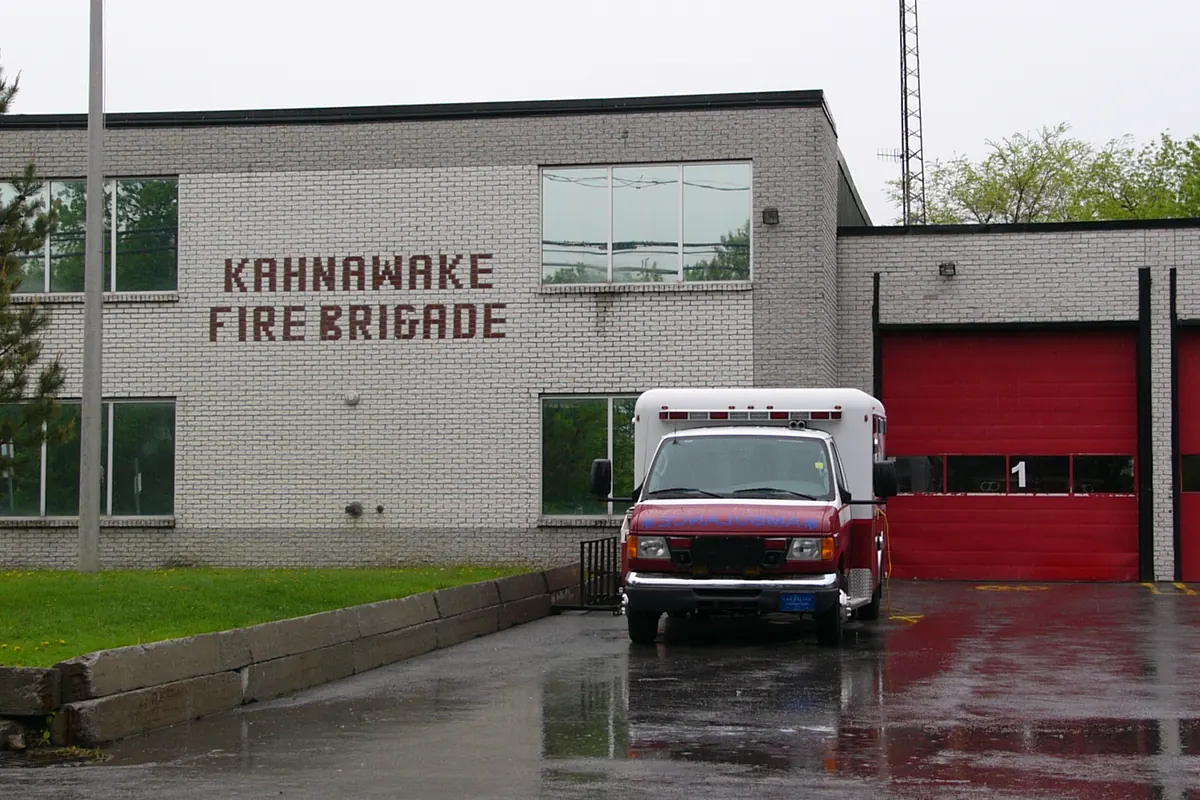
The Kahnawà:ke Gaming Commission. According to its own FAQ, the Commission was established on June 10, 1996, under the Kahnawake Gaming Law (MCR No. 26 / 1996-97). Kahnawà:ke is a Mohawk community of about 8,000 people on the south shore of the St. Lawrence River, about 20 minutes from Montréal.
The Commission describes its authority as a facet of the sovereign rights Kahnawà:ke holds as a community of Indigenous peoples to govern its own affairs, and its FAQ says that in 2007 this authority was favourably considered in a decision of the Superior Court of Québec. Its members are appointed by the Mohawk Council of Kahnawà:ke, the community's governing body.
Online regulation came three years after the Commission itself. On July 8, 1999, using powers in section 35 of the Kahnawà:ke Gaming Law, the Commission enacted its Regulations concerning Interactive Gaming. The current version on its site is dated March 2026. The Commission also licenses land-based activity inside the Territory: poker rooms, raffles and electronic gaming devices.
What kinds of permits does the Commission issue?
Section 10 of the Regulations concerning Interactive Gaming lists five types of licence, authorization and permit. The descriptions below come from the Commission's Permit Holders page.
| Permit | Who holds it | What it allows |
|---|---|---|
| Interactive Gaming Licence (IGL) | An approved hosting facility in Kahnawà:ke | Only one IGL is issued at a time. Mohawk Internet Technologies has held it since 1999. |
| Client Provider Authorization (CPA) | Operators | Offering interactive gaming of any type (casino, poker, sportsbook) from the licensed hosting facility. There is no limit on the number of CPAs. |
| Casino Software Provider Authorization (CSPA) | Software suppliers | Running gaming equipment at the hosting facility and licensing casino software to third-party operators, but not offering games directly to players. |
| Live Dealer Studio Authorization (LDSA) | Studio operators | Running a live dealer studio and conducting live dealer games from premises in Kahnawà:ke. |
| Key Person Permit | At least one manager of each CPA or CSPA holder | Personal approval of the people who run the business. The Commission treats the details as confidential. |
For a player, the CPA is the one that matters. When a casino says it is "licensed in Kahnawake", it should mean the operating company holds a Client Provider Authorization. Under sections 11 and 12 of the Regulations, a CPA must be appended to the Interactive Gaming Licence and is valid only while that licence is in good standing. The Commission's site adds that CPA holders must be hosted at Mohawk Internet Technologies, a data centre in the Territory managed by Continent 8 Technologies.
How do you check that a site's permit is real?
Section 269 of the Regulations requires each operator to display the Commission's logo prominently, linked to a Certificate of Good Standing issued by the Commission. The FAQ says that if a site claims a Kahnawake licence but does not show the logo with a linked certificate, you can report it to [email protected].
The Commission also publishes a list of operators and their URLs on its Permit Holders page, with a note that not every URL is accessible in every jurisdiction. Two cross-checks take a minute: click the logo and confirm the certificate names the same company as the site's terms and conditions, then search the Permit Holders list for that company. The Commission's news page announces suspensions and voluntary terminations of CPAs, so a recent notice about the company is worth reading before you deposit.
What does the complaint process look like, and how long does it take?
Part XXIV of the Regulations (sections 267 to 281) sets out the route. The Commission's dispute page says player complaints must go to the licence holder first.
- Complain to the operator in writing through its designated complaint channel. Section 270 gives the operator 45 days from receipt to issue a final decision.
- Escalate to the Commission if you disagree with the final decision, or if 45 days pass without one. Section 270 says this applies notwithstanding anything to the contrary in the operator's terms and conditions.
- Watch the six-month window. Section 272 says complaints must reach the Commission not more than six months after the subject matter first arose, though a complaint lodged with the operator inside that window can still go to the Commission if the operator's process runs past it.
- Put it in writing, with identity and history. Section 271 requires clear information about who you are, the details of the complaint and the steps taken with the operator, including when the operator received it and any final decision. Complaints go to [email protected] or the form on the dispute page; the Commission says it will not accept updates by phone.
- The operator answers the Commission with a full written response within seven days, or another time the Commission sets (section 275).
- The Commission decides. Under section 277 it can dismiss the complaint as unfounded, uphold it in whole or in part, direct the operator to take steps to resolve it, or direct the operator to pay the Commission's investigation costs.
The Commission can skip the operator stage where the matter is urgent, including underage gambling, problem gambling or self-exclusion, and alleged fraud or seizure of player funds (section 270). Where an operator refuses a withdrawal on grounds of fraud, section 281 requires it to substantiate the allegation to the Commission; if the Commission is not satisfied, it directs the operator to remit the disputed funds in whole or in part.
The dispute page also lists things that can jeopardize the Commission's ability to help, including a complaint that has been discussed on a public forum or shared with the media, or one already being handled or ruled on by another jurisdiction.
How many complaints actually succeed?
The Commission's 2025 Dispute Resolution Summary reports 1,143 incoming complaints for the year. Of those, 387 did not meet the Commission's criteria, leaving 756 validated complaints. Payment was the dominant issue: 598 validated complaints concerned late, delayed or refused payment to the player.
Of the 746 validated complaints resolved by December 31, 2025, 150 were upheld in whole or in part in the player's favour and 596 were closed or dismissed as unfounded. That is 150 ÷ 746 = 20.1% upheld. The numbers do not show how much money was recovered, but they do show that a complaint is a real route, not a formality, and that most complaints that reach a decision do not succeed.
Is a Kahnawake-licensed site legal in Ontario or Quebec?
The Criminal Code gives the conduct and management of lottery schemes to provincial governments. Section 207(1)(a) makes it lawful for the government of a province, alone or with another province, to conduct and manage a lottery scheme in that province. Section 207(4)(c) keeps games operated on or through a computer, video device or slot machine out of the schemes that charities and other bodies can be licensed to run. The Commission's position rests on Kahnawà:ke's asserted sovereignty, not on a provincial licence.
In Ontario, the AGCO says operators must register with it and sign an operating agreement with iGaming Ontario to operate in the province. It also says it has no legal relationship with unregulated igaming operators and can assist only with disputes related to regulated sites. A Kahnawake permit on its own does not make a site part of that market. The regulated options are covered on our Ontario casinos page.
In Quebec, Loto-Québec's online gaming terms offer play to Québec residents aged 18 or older who are physically in the province. The provincial picture is on our Quebec casinos page.
The Commission's own rules point the same way. Section 6 of its Regulations makes operators responsible for conforming to the laws and regulations of comparable jurisdictions, including advertising rules. The approved age for play is defined as the greater of 18 or the age required in the player's own jurisdiction, which means 19 for a player in Ontario.
What does a Kahnawake permit not protect you from?
- Provincial complaint routes. The AGCO will not take up a dispute with a site it does not regulate. Your escalation route is the Commission, under its own time limits.
- Provincial self-exclusion. Ontario's BetGuard and other provincial programs cover their own regulated sites, as explained in our guide to self-exclusion in Canada. The Commission runs a separate Comprehensive Self-Exclusion, which is permanent and irrevocable (section 305), but section 308 limits its effect to gaming systems the Commission licenses.
- Late or refused payment. The licence gives you a process, not a guarantee. Most of the Commission's 2025 validated complaints were about payment, and about four in five resolved complaints went against the complainant.
- Ontario's own standards. The AGCO says a site that is not regulated in Ontario is not operating under its Registrar's Standards for Internet Gaming, and lists the risks: payouts that may not be timely or accurate, personal data that may not be secure, and no requirement to provide safer-gambling tools.
What the permit does give you is a regulator that checks the people behind the operator, tests the software and audits the systems annually through its Approved Agents, according to its FAQ, and a written process that the operator's terms cannot override. More on how Kahnawake-licensed sites compare is on the Kahnawake casinos page.
Players who need help can call ConnexOntario at 1-866-531-2600 in Ontario or contact the Responsible Gambling Council in any province.
Where you can play
 N1Bet Casino300% up to C$10,000 + 200 free spins on the first four deposits50x wagering on the bonusVisit casino
 Zotabet Casino100% up to C$10,000 + 100 free spinsnot registered with iGaming OntarioVisit casino
 SlotsMafia Casino100% up to C$3,000 + 200 free spinsbonus needs a C$45 depositVisit casino
Advertising · not shown to Ontario residents · 19+ · Operator T&Cs apply · Play responsibly
Frequently asked questions
When was the Kahnawà:ke Gaming Commission created?
On June 10, 1996, under the Kahnawake Gaming Law (MCR No. 26 / 1996-97), according to the Commission's FAQ. It enacted its Regulations concerning Interactive Gaming on July 8, 1999.
What is a Client Provider Authorization?
It is the permit an operator needs to offer online casino, poker or sports betting from the licensed hosting facility in Kahnawà:ke. It must be appended to the single Interactive Gaming Licence, which Mohawk Internet Technologies has held since 1999.
How long do I have to complain to the Commission?
Section 272 of the Regulations sets a limit of six months from when the issue first arose. You must go to the operator first; if it does not issue a final decision within 45 days, or you disagree with it, you can escalate.
Will the AGCO help with a dispute against a Kahnawake-licensed site?
Not unless the site is registered in Ontario. The AGCO says it can assist only with disputes related to regulated sites and has no legal relationship with unregulated operators.
Does Kahnawake self-exclusion block Ontario sites too?
No. Section 308 of the Regulations limits a Comprehensive Self-Exclusion to gaming systems the Commission licenses and regulates. Ontario's regulated sites use their own self-exclusion arrangements.
What age does a Kahnawake-licensed site have to enforce?
The Regulations define the approved age as the greater of 18 or the age required in the player's jurisdiction. For a player in Ontario that is 19.
Sources
- Kahnawà:ke Gaming Commission: FAQs
- Kahnawà:ke Gaming Commission: About Interactive Gaming
- Kahnawà:ke Gaming Commission: Permit Holders
- Kahnawà:ke Gaming Commission: Regulations page
- Regulations concerning Interactive Gaming (March 2026)
- Kahnawà:ke Gaming Commission: Dispute Resolution
- Kahnawà:ke Gaming Commission: 2025 Dispute Resolution Summary
- Criminal Code, s. 207
- AGCO: Internet gaming complaints
- AGCO: Benefits of playing on a regulated site
- AGCO: AGCO calls on media platforms to step up the fight against unregulated online gambling sites
- Loto-Québec: Specific conditions of use
How we are fundedIf you sign up through a link, we may earn a commission; it has no effect on the review.19+Help: ConnexOntario 1-866-531-2600
Read next
 Player protectionSelf-exclusion in Ontario and across Canada: terms, balances and the way backHow self-exclusion works in Ontario and other provinces: BetGuard vs operator programs, term lengths, what happens to your balance, and how to return.
 TaxAre gambling winnings taxable in Canada? The windfall rule and its exceptionsAre gambling winnings taxable in Canada? The CRA windfall rule, the business test for professional gamblers, poker case law and US withholding.
 LicensingWhy Ontario casino apps block you near the border or on a VPNWhy Ontario casino apps block you near the Quebec, Manitoba or US border or on a VPN: the AGCO location rule, how checks work.